The practice of layering rugs has evolved from a practical necessity in drafty old homes to a sophisticated design technique that separates the amateurs from the professionals. What started as a way to add warmth and cover worn flooring has become one of the most effective tools in an interior designer's arsenal—when executed properly. But there's a fine line between a layered look that elevates a space and one that makes a room feel cluttered, confused, or just plain wrong.
The Appeal of Layered Rugs
Layering rugs addresses several design challenges simultaneously. In large, open-plan spaces that have become standard in modern architecture, a single rug often looks like a postage stamp floating in an ocean of flooring. Layering allows you to anchor a seating area while adding visual interest without the expense of a custom-sized rug that could cost thousands of dollars.
The technique also offers a solution for renters and homeowners stuck with less-than-ideal flooring. That builder-grade carpet or dated tile doesn't have to dictate your entire aesthetic when you can layer rugs to create the look you want. Beyond practical concerns, layering introduces texture, pattern, and depth in ways that a single rug simply cannot achieve.
When Layering Works Brilliantly
The Classic Foundation Approach
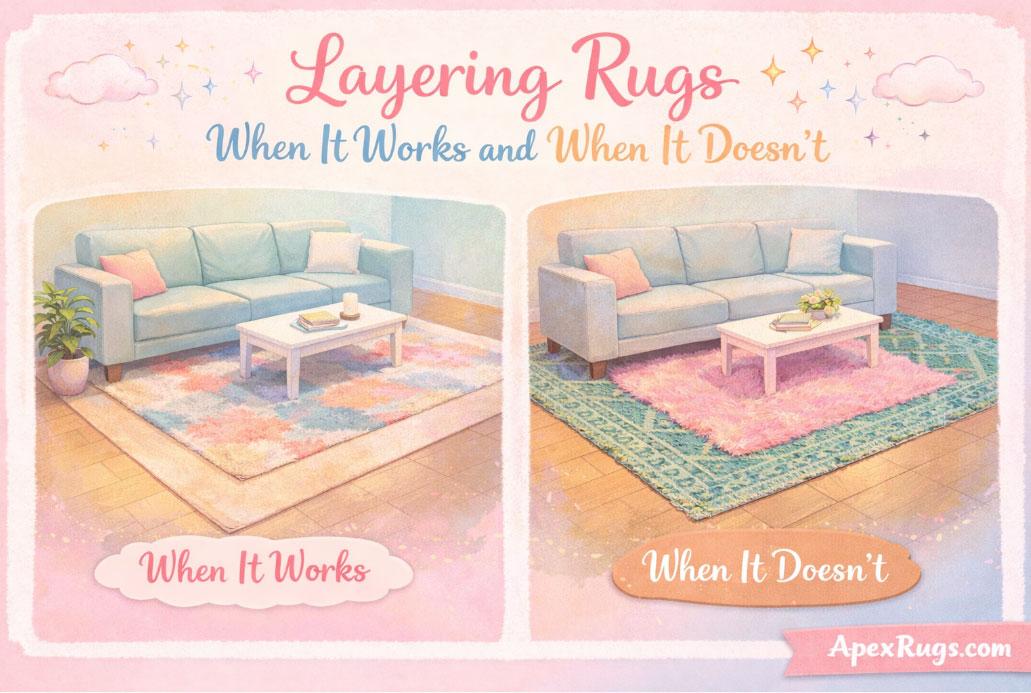
The most foolproof layering strategy involves using a large, neutral base rug with a smaller, more decorative rug on top. This approach works because it follows a clear visual hierarchy. A jute, sisal, or other natural fiber rug serves as the foundation, extending far enough to ground all the furniture in a seating arrangement. The top rug, positioned under a coffee table or in the center of the seating area, brings in color, pattern, or a luxurious texture like a vintage Persian or a plush sheepskin.
This method succeeds because each rug has a distinct purpose. The bottom rug defines the zone and provides neutral continuity, while the top rug acts as the design statement. There's no competition between the two pieces, just complementary roles that work together.
Small Spaces with Big Style
Counterintuitively, layering can work beautifully in small rooms when done with restraint. A small bedroom with a jute rug extending from under the bed, topped with a colorful runner on each side, creates visual interest without overwhelming the space. The key is keeping the bottom layer neutral and letting it peek out just enough to create a frame for the more decorative top layer.
Studio apartments benefit particularly well from this technique. Using a large, inexpensive rug to define the entire living zone, then layering a smaller, higher-quality rug in the seating area, creates distinction between spaces without the need for room dividers or major furniture investments.
Textural Layering in Minimalist Spaces
In rooms with minimal furniture and a pared-back aesthetic, layered rugs provide essential texture and warmth. A Scandinavian-inspired living room with white walls and simple furniture can feel austere without adequate softness. Layering a chunky wool rug over a flat-weave kilim, or placing a sheepskin over a neutral jute rug, introduces the tactile variation that makes minimalist spaces feel inviting rather than cold.
This works because the textures do the visual heavy lifting that pattern and color would typically provide. The eye has something to explore and the space gains dimension without compromising the clean aesthetic.
Vintage and Eclectic Interiors
Rooms that embrace maximalism or an eclectic, collected-over-time aesthetic are natural candidates for rug layering. When you're already mixing patterns, eras, and styles throughout a space, layered rugs reinforce that intentional approach. A faded antique rug layered over a newer, more saturated piece can look absolutely right in a room filled with inherited furniture, travel souvenirs, and art collected from various sources.
The bohemian aesthetic practically demands layered rugs. The slightly undone, organic quality of rugs that overlap and interact creates the lived-in, worldly atmosphere that defines this style. Matching becomes irrelevant when the goal is a curated collection that tells a story.
When Layering Fails Spectacularly
The Too-Small Top Layer
One of the most common mistakes is using a top rug that's too small for the space it's meant to anchor. A tiny decorative rug floating on top of a larger base rug looks like an afterthought, not an intentional design choice. The proportions feel off, and instead of adding interest, the small rug just looks lost.
This frequently happens when people try to layer an existing small rug they already own rather than purchasing a piece that's appropriately sized for the job. If your top-layer rug doesn't extend beyond the coffee table or at least reach the front legs of your seating furniture, it's too small to layer effectively.
Pattern Overload
Layering two heavily patterned rugs rarely works unless you have an exceptionally trained eye for scale, color, and pattern mixing. When both rugs feature busy designs, they compete for attention and create visual chaos. The eye doesn't know where to land, and the effect is restless rather than harmonious.
This mistake often stems from loving two patterned rugs and wanting to use both. But unlike throw pillows, which are small enough that multiple patterns can coexist peacefully, rugs occupy significant visual real estate. Two large patterns fighting for dominance will usually both lose.
Wrong Texture Combinations
Not all textures layer well together. A shaggy, high-pile rug over another shaggy rug creates a lumpy, unstable surface that's unpleasant to walk on and looks messy. Similarly, two very stiff, flat rugs layered together can slide around, creating a safety hazard and a constant maintenance annoyance.
The most successful texture combinations pair opposites: smooth with rough, flat with plush, tight weave with loose weave. This creates both visual and tactile interest while ensuring the layers interact properly.
Insufficient Size Differential
When the bottom and top rugs are too close in size, the layering looks accidental or confused. You need enough of the base rug showing to establish it as a distinct layer—generally at least six to twelve inches of the bottom rug should be visible on all sides of the top rug. Without this clear differentiation, it just looks like you couldn't decide which rug to use.
Formal Rooms That Need Cohesion
Traditional, formal spaces often look better with a single, high-quality rug rather than layered pieces. A formal dining room with an antique table and upholstered chairs typically calls for one elegant rug that accommodates all the furniture, including when chairs are pulled out. Layering in this context can undermine the polished, cohesive look these spaces require.
The same applies to formal entryways and traditional home offices. These spaces benefit from the clarity and sophistication of a single well-chosen rug rather than the casual, eclectic feel that layering inherently brings.
The Technical Considerations
Rug Pad Requirements
Layering rugs without proper padding is asking for trouble. You'll need a rug pad between the floor and the bottom rug, and ideally a thin non-slip pad between the two rugs as well. Without this foundation, your rugs will slide, bunch, and create trip hazards. The investment in quality rug pads is non-negotiable if you want your layered look to function properly.
Cleaning and Maintenance Reality
Layered rugs are significantly more difficult to clean than a single rug. You can't vacuum them as easily, and when one needs professional cleaning, you have to deal with both. In high-traffic areas or homes with pets and children, this practical consideration might outweigh the aesthetic benefits. Be honest about your lifestyle and maintenance tolerance before committing to layered rugs in busy areas.
Door Clearance and Transitions
The combined thickness of two rugs can create problems with door clearance and transitions to other rooms. Before layering, check that doors can still open and close properly. Also consider how the layered height works with transitions to hardwood, tile, or carpet in adjacent spaces. An awkward bump or trip hazard at a threshold negates any design benefits.
Successful Color and Pattern Strategies
The Neutral Foundation Principle
The most reliable approach is keeping your base rug neutral—natural fiber colors like beige, gray, cream, or soft brown. This creates a flexible foundation that won't clash with your top rug choice and won't limit your options if you want to change the top layer later. Neutrality in the base layer also helps the overall look feel grounded rather than chaotic.
Complementary Color Stories
When both rugs have color, they should share an undertone or exist within a complementary color story. A warm-toned vintage rug won't layer well over a cool-toned gray base. Look for connecting threads in the color palette—perhaps the base rug has subtle flecking that picks up a color in the top rug, or both share a similar level of saturation even if the actual hues differ.
Scale Variation in Patterns
If you're layering two patterned rugs, the patterns need to differ significantly in scale. A large-scale geometric might work over a subtle, small-scale texture or pattern, but two medium-scale patterns will muddle together. The contrast in scale creates visual clarity that allows each pattern to be appreciated rather than competing.
Room-by-Room Applications
Living Rooms
Living rooms offer the most opportunity for successful rug layering because they typically have enough space to establish clear zones and proportions. The furniture arrangement helps define where rugs should go, and the casual nature of living spaces accommodates the relaxed aesthetic of layering.
A common winning formula: nine-by-twelve or eight-by-ten jute rug as the base, with a five-by-seven or six-by-nine decorative rug on top, positioned under the coffee table with the front legs of surrounding furniture on the base rug.
Bedrooms
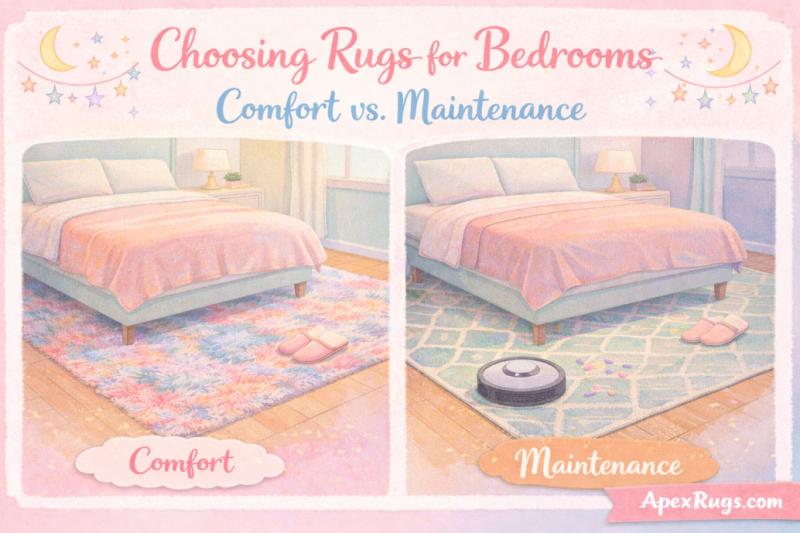
Bedroom layering works best when rugs extend from under the bed. A large base rug can go under the entire bed, with runners or smaller rugs layered on top on either side where you step out. Alternatively, a rug can start at the foot of the bed, extending into the room, with a smaller, plush rug layered in the center for stepping onto.
Avoid layering in the pathway between the bed and bathroom—the combined height creates a nighttime tripping hazard, and functionality must trump aesthetics in this scenario.
Dining Rooms
Dining room layering requires careful consideration of chair movement. If you choose to layer, the bottom rug must be large enough to accommodate chairs even when pulled out from the table. The top rug should be centered under the table, but this arrangement works best in casual dining spaces rather than formal ones. Consider whether the layered look matches the room's formality level.
Outdoor Spaces
Covered patios and porches are excellent candidates for rug layering. Outdoor rugs are typically less expensive, and the casual nature of outdoor living spaces suits the layered aesthetic. Plus, the durability of outdoor rugs means they can handle the extra wear of being layered. This is a great place to experiment with the technique before committing to it indoors.
Budget-Friendly Layering
One of layering's practical advantages is cost management. A large, high-quality rug in a premium material can cost several thousand dollars. But a large, inexpensive jute or synthetic rug might cost a few hundred, allowing you to invest in a smaller, higher-quality piece for the top layer. The combination can cost half what a single large premium rug would cost while delivering comparable visual impact.
This strategy particularly benefits those furnishing their first home or updating a space on a limited budget. You can start with an affordable base rug and upgrade the top layer as your budget allows, eventually replacing the base as well if desired.
Cultural and Historical Context
Rug layering has roots in various cultures and historical periods. In traditional Moroccan homes, layering rugs was common, with different pieces serving different purposes—some for warmth, some for decoration, some to designate seating areas. Scandinavian homes historically layered textiles, including rugs, for insulation during harsh winters.
Understanding this heritage can inform contemporary layering. The technique feels most authentic when it serves a purpose beyond pure decoration—adding warmth, defining space, protecting flooring, or incorporating meaningful pieces that wouldn't work alone.
The Verdict
Layering rugs works when it solves a problem, follows clear design principles, and suits both the space and your lifestyle. It fails when it's done simply because it's trendy, without consideration for proportion, texture, pattern, or practical function.
The technique shines in casual, eclectic, or bohemian spaces where it reinforces the overall aesthetic. It struggles in formal settings that require polish and cohesion. It offers budget-friendly solutions and design flexibility, but demands more maintenance and careful execution than using a single rug.
Before layering, ask yourself: Does this serve a purpose beyond looking Pinterest-worthy? Do the proportions work? Will I actually maintain this? Can I walk on it comfortably? Does it match the formality level of my space? If you can answer yes to these questions, layering might be exactly what your room needs. If not, a single well-chosen rug will likely serve you better.
The best interiors feel intentional, not accidental. Layered rugs should look like a thoughtful design decision, not like you couldn't choose between two rugs or didn't have one large enough. When layering works, it adds depth, warmth, and personality in ways that single rugs cannot match. When it doesn't, it's just clutter on your floor.