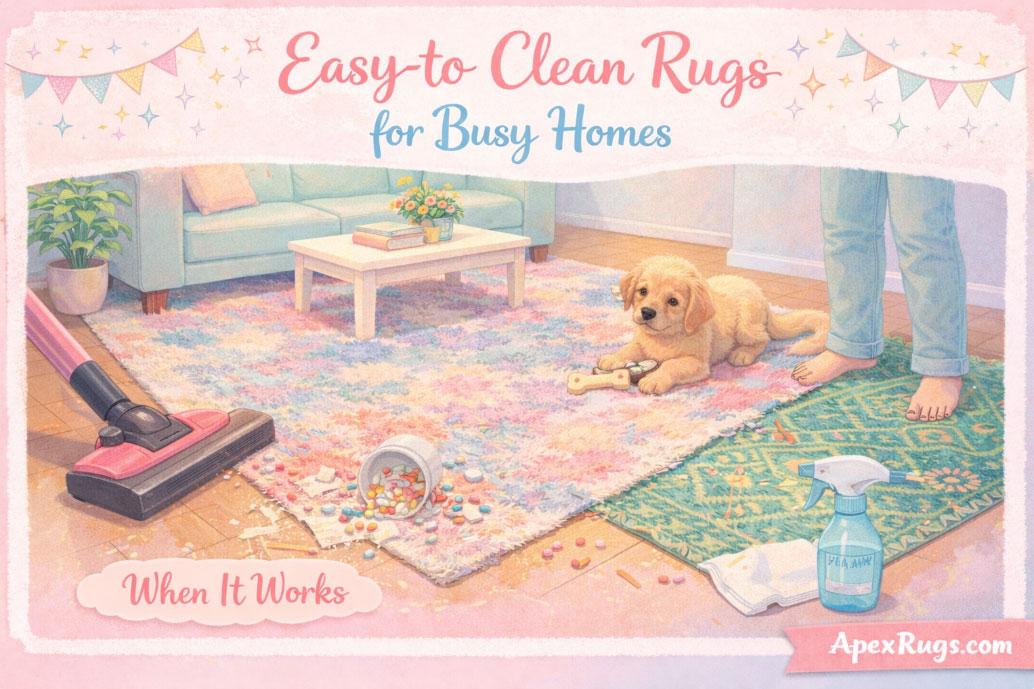
Life moves fast. Between work deadlines, school pickups, meal prep, and everything else that fills our days, the last thing anyone wants to worry about is whether their living room rug can handle whatever gets thrown at it—literally. For households juggling multiple priorities, the right rug isn't just about aesthetics. It's about survival.
The modern home needs floor coverings that work as hard as the people living in them. Spills happen. Pets track in mud. Kids drop snacks. These aren't occasional mishaps; they're regular occurrences that demand rugs built for real life. This guide explores the world of easy-to-clean rugs, helping you navigate materials, styles, and practical considerations that make maintaining a beautiful home actually manageable.
Understanding What Makes a Rug Easy to Clean
Not all rugs face the same challenges, and not all cleaning methods work equally well across different materials. Before diving into specific options, it's worth understanding what separates a low-maintenance rug from one that becomes a constant source of stress.
Material composition sits at the top of the list. Synthetic fibers like polypropylene, polyester, and nylon resist stains far better than natural materials. These manufactured options don't absorb liquids as readily, giving you precious extra seconds to blot up spills before they set. Natural fibers like wool have their merits, but they require more careful attention.
Pile height makes a significant difference in cleanability. Low-pile and flatweave rugs trap less dirt and debris than their high-pile cousins. While a plush shag rug feels luxurious underfoot, it becomes a magnet for crumbs, pet hair, and dust. Shorter fibers mean easier vacuuming and simpler spot cleaning.
Weave tightness affects how well a rug stands up to regular cleaning. Tightly woven rugs prevent dirt from penetrating deep into the fibers. Loose weaves might look beautifully textured, but they create pockets where grime settles in for the long haul.
Color and pattern choices play a strategic role. Light colors show every mark, while very dark colors highlight dust and pet hair. Medium tones with varied patterns offer the sweet spot, camouflaging minor imperfections between deep cleans.
Top Materials for Low-Maintenance Living
Polypropylene: The Workhorse of Busy Households
Polypropylene rugs, also called olefin rugs, have earned their reputation as the ultimate practical choice. This synthetic fiber resists moisture, stains, and mildew with impressive effectiveness. Spilled wine, dropped spaghetti sauce, or tracked-in mud wipe away without leaving permanent reminders of the incident.
The fiber's non-absorbent nature means most liquids sit on the surface rather than soaking in. Many polypropylene rugs can handle outdoor use, which speaks volumes about their durability. They resist fading from sunlight and stand up to heavy foot traffic without showing wear patterns quickly.
Cost represents another advantage. Polypropylene rugs typically come in at budget-friendly price points, making them practical for households that need multiple rugs or plan to replace them as styles change. The affordability factor removes the anxiety of damage—if something catastrophic happens, replacement won't break the bank.
These rugs do have limitations. They can feel less luxurious than natural fibers, and some lower-quality versions may shed initially or develop a slight sheen over time. However, for high-traffic areas and homes with active families, the trade-offs often make sense.
Nylon: Durable and Resilient
Nylon rugs offer a step up in feel while maintaining excellent stain resistance. This synthetic fiber bounces back from compression better than most alternatives, making it ideal for furniture-heavy rooms where leg indentations typically mar lesser materials.
The fiber accepts dye well, resulting in rich, fade-resistant colors that maintain their vibrancy through years of use and cleaning. Nylon handles both water-based and oil-based stains effectively, particularly when treated with stain-resistant coatings that many manufacturers apply.
Regular vacuuming keeps nylon rugs looking fresh, and most spills respond well to simple soap and water solutions. The material dries relatively quickly, reducing the risk of mildew or musty odors that plague some natural fiber options.
Price points for nylon rugs vary widely based on construction quality and design complexity. While generally more expensive than polypropylene, nylon rugs deliver enhanced durability that often justifies the additional investment for main living areas that see constant use.
Polyester: Soft and Stain-Resistant
Polyester rugs bring surprising softness to the synthetic category. The fiber creates a plush feel that rivals natural materials while maintaining the stain resistance busy homes require. This combination makes polyester particularly appealing for bedrooms and family rooms where comfort matters alongside practicality.
The material resists water-soluble stains exceptionally well. Coffee, juice, and wine—the holy trinity of household spills—clean up with minimal effort on polyester fibers. The material also resists crushing and matting, helping rugs maintain their original appearance longer.
Polyester rugs often feature vibrant colors and intricate patterns. The fiber holds dye excellently, and manufacturers can create everything from bold modern designs to traditional patterns with sharp, clear details. This versatility means you don't sacrifice style for functionality.
One consideration: polyester can attract and hold onto oil-based stains more stubbornly than other synthetics. However, for most households where water-based spills dominate the threat landscape, polyester delivers outstanding performance.
Indoor-Outdoor Rugs: Built for Anything
Rugs designed for outdoor use bring serious cleaning credentials to interior spaces. These products endure rain, sun, and outdoor grime, making indoor messes feel like child's play by comparison.
Most indoor-outdoor rugs use polypropylene or polyester in tight, low-pile weaves. This construction creates incredibly durable surfaces that hose off easily—literally. Some homeowners take these rugs outside for periodic spray-downs, making deep cleaning as simple as it gets.
The flatweave construction typical of these rugs means crumbs and dirt don't get embedded. A quick vacuum or sweep removes surface debris effectively. Spills wipe away without drama, and the materials dry fast enough that moisture doesn't become an issue.
Design options have expanded dramatically in recent years. Indoor-outdoor rugs now come in sophisticated patterns and colors that work beautifully in living rooms, dining areas, and playrooms. The stigma of "outdoor-only" aesthetics has largely disappeared as manufacturers recognize the indoor potential.
Machine-Washable Rugs: Ultimate Convenience
Perhaps the most revolutionary development in easy-care rugs comes from brands creating machine-washable options. These rugs fit in standard home washing machines, transforming rug cleaning from a professional expense or backbreaking chore into a routine laundry task.
Machine-washable rugs typically use cotton or synthetic fibers in constructions that maintain their shape and appearance through multiple wash cycles. Special backing prevents bunching and distortion, while the materials resist shrinking.
For homes with young children, pets, or anyone prone to spills, machine-washable rugs eliminate stress. When accidents happen, throw the rug in the washer and move on with life. No scrubbing, no specialized products, no waiting for professional cleaners.
Size limitations apply—larger rugs exceed washing machine capacities. However, manufacturers offer various dimensions, and strategic placement of smaller washable rugs in key areas provides excellent coverage for most homes.
Best Rugs for Specific Household Challenges
Pet-Friendly Options
Pet owners face unique rug challenges. Muddy paws, shedding fur, occasional accidents, and that distinctive wet dog smell all test floor coverings. The right rug makes peaceful coexistence between pets and décor possible.
Low-pile synthetic rugs work best in pet households. The short fibers don't trap fur the way deep-pile rugs do, and vacuum cleaning remains effective. Darker colors and busy patterns hide inevitable dirt between cleanings.
Water-resistant materials are non-negotiable for homes with pets who have accidents or track in water from outdoor adventures. Polypropylene's moisture resistance prevents liquids from soaking through to floors, protecting both the rug and the surface beneath.
Some manufacturers create rugs specifically marketed as pet-friendly, often incorporating antimicrobial treatments that resist odor development. These treatments help manage the challenge of pet-related smells that can permeate more absorbent materials.
Kid-Safe Rugs for Playrooms and Bedrooms
Children and rugs engage in daily battles. Art projects, snack time, playdough sessions, and muddy shoes all leave their marks. Rugs for kid spaces need to handle the abuse without showing every incident.
Polypropylene and polyester rugs top the list for children's areas. Both materials clean easily and resist common kid-related stains. The synthetic nature means less worry about allergies that sometimes accompany natural fiber rugs.
Bright colors and fun patterns serve double duty in kids' spaces. They create visual interest while hiding the minor stains and marks that accumulate despite best efforts. Solid colors or pale rugs in play areas become science experiments in stain collection.
Consider machine-washable options for nurseries and toddler rooms where diaper leaks and spit-up regularly threaten floor coverings. The ability to fully wash away messes provides peace of mind during those messy early years.
Dining Room Durability
Dining areas present their own challenges. Food and drink spills occur regularly, and chair movement creates constant friction that wears down lesser rugs. The right dining room rug balances style with serious practical demands.
Indoor-outdoor rugs excel under dining tables. Their tight weaves mean dropped food sits on the surface for easy cleanup rather than working down into fibers. Most spilled drinks wipe away completely, and the materials handle repeated chair sliding without deteriorating.
Size matters in dining rooms. Rugs should extend far enough that chairs remain on the rug even when pulled out from the table. This prevents the chair legs from catching on the rug edge, which causes both damage and tripping hazards.
Flatweave or very low-pile options work better than plush alternatives in dining spaces. High-pile rugs catch chair legs and make scooting difficult, frustrating daily use. The smooth surface of flatweaves allows easy chair movement while still defining the dining area.
Cleaning and Maintenance Strategies
Daily and Weekly Care
Consistent light maintenance prevents major cleaning crises. A few simple habits keep easy-care rugs looking good with minimal time investment.
Vacuum high-traffic rugs at least twice weekly. This removes surface dirt before it gets ground into fibers. Use appropriate vacuum settings—high-pile rugs need different treatment than flatweaves. Some delicate materials benefit from a handheld vacuum or broom rather than a heavy upright vacuum.
Spot-clean spills immediately. Blot rather than rub to prevent spreading the stain and damaging fibers. Keep basic cleaning supplies accessible—paper towels, clean cloths, and a spray bottle of diluted dish soap solution handle most fresh spills effectively.
Shake out or sweep smaller rugs regularly. Taking a lightweight rug outside for a good shake removes accumulated dust and debris that vacuuming might miss. This works especially well for flatweave and cotton rugs.
Tackling Common Stains
Despite the best prevention efforts, stains happen. Knowing how to address common culprits quickly limits damage.
Coffee and tea: Blot excess liquid immediately. Mix one tablespoon of dish soap with two cups of warm water. Apply with a clean cloth, working from the stain's outer edge toward the center. Blot dry with a clean towel.
Red wine: Blot up as much wine as possible. Sprinkle the area with salt or baking soda to absorb remaining liquid. After 15 minutes, vacuum up the salt. If staining remains, treat with a mixture of dish soap and hydrogen peroxide, then rinse and blot dry.
Grease and oil: Sprinkle cornstarch or baking soda on the stain to absorb the oil. Let it sit for at least an hour, then vacuum. Apply a small amount of dish soap directly to any remaining stain, work it in gently, then rinse with water and blot dry.
Mud: Let mud dry completely before attempting removal. Vacuum or brush away dried dirt. If staining remains, use a mixture of dish soap and water, apply to the stain, and blot clean.
Pet accidents: Blot up as much moisture as possible. Use an enzymatic cleaner designed for pet stains rather than regular cleaning products. These cleaners break down the proteins that cause odors, preventing pets from returning to the same spot.
Deep Cleaning Methods
Even easy-care rugs need occasional deep cleaning. The frequency depends on household traffic and usage, but once or twice yearly keeps most rugs in good condition.
For machine-washable rugs, follow manufacturer instructions carefully. Use mild detergent and avoid fabric softeners, which can leave residues. Air dry when possible, as heat can damage backing materials.
Larger synthetic rugs often respond well to carpet cleaning machines. Rent or purchase a machine designed for area rugs, or hire professionals who specialize in synthetic materials. Test cleaning solutions on an inconspicuous area first to ensure colorfastness.
Some indoor-outdoor rugs tolerate hosing off outdoors. Lay the rug on a clean driveway or patio, spray with water and mild soap, scrub with a soft brush, rinse thoroughly, and allow to dry completely before bringing back inside.
Professional cleaning makes sense for valuable rugs or stubborn staining that home methods can't resolve. Research cleaners who work with your specific rug type, as techniques for synthetics differ from those used on natural fibers.
Design Considerations That Don't Sacrifice Style
Practical doesn't mean boring. Modern easy-care rugs come in styles ranging from traditional to contemporary, proving that you can have both beauty and functionality.
Pattern selection dramatically impacts a rug's perceived cleanliness between washings. Geometric patterns, abstract designs, and varied colors hide minor imperfections better than solid colors. Moroccan-inspired patterns, in particular, offer visual interest while camouflaging the realities of daily use.
Texture adds interest without complicating cleaning. Some synthetic rugs incorporate varied pile heights or mixed materials to create dimensional effects that look sophisticated while remaining practical. These textural elements provide visual depth that solid, flat rugs lack.
Color psychology plays a role in both aesthetics and practicality. Gray tones hide many types of dirt effectively while working with various décor styles. Navy blues and deep greens offer richness without showing every footprint. Multicolored rugs with medium values provide the most flexibility.
Size and placement affect both function and design. Larger rugs make spaces feel cohesive and anchor furniture arrangements, but they also present bigger cleaning challenges. Multiple smaller rugs allow for rotating pieces in and out for cleaning while maintaining coverage.
Making the Right Choice for Your Home
Selecting the perfect easy-clean rug requires honest assessment of your household's specific needs. A family with three dogs and two toddlers faces different challenges than empty nesters who entertain frequently.
Evaluate traffic patterns in your home. Entryways and hallways take the most abuse and benefit from ultra-durable indoor-outdoor rugs or low-pile synthetics. Living rooms might accommodate slightly more delicate options if shoes typically come off at the door.
Consider your cleaning style. If you're someone who enjoys regular deep cleaning, a wider range of materials might work. If you prefer set-it-and-forget-it solutions, stick with the most forgiving options like polypropylene or machine-washable varieties.
Budget appropriately. Easy-care rugs span enormous price ranges. Determine what you can spend and invest in the best quality within that range. Sometimes buying multiple affordable rugs for rotation makes more sense than one expensive piece that stresses you out every time someone walks across it.
Think long-term. A rug that handles your current life stage might not work five years from now. However, synthetic easy-care options generally cost less than natural fiber rugs, making future changes less financially painful.
The right rug transforms a house into a comfortable home without adding stress to already busy lives. By choosing materials and styles that align with real-world demands, you create spaces that look beautiful and function effortlessly. Easy-care rugs prove that practical choices don't require aesthetic compromises—they simply require thoughtful selection based on what matters most to the people living with them every day.