The rug market has undergone a dramatic transformation over the past decade. What was once an exclusively tactile, in-person shopping experience has evolved into a billion-dollar online industry where customers confidently purchase thousand-dollar pieces without ever touching a single fiber. Yet traditional brick-and-mortar showrooms remain alive and well, continuing to draw shoppers who value the old-fashioned approach to rug buying.
This split in the marketplace raises an important question for anyone in the market for a new rug: which shopping method truly serves your needs better? The answer isn't as straightforward as e-commerce enthusiasts or traditional retailers might have you believe.
The Online Rug Revolution
Unmatched Selection at Your Fingertips
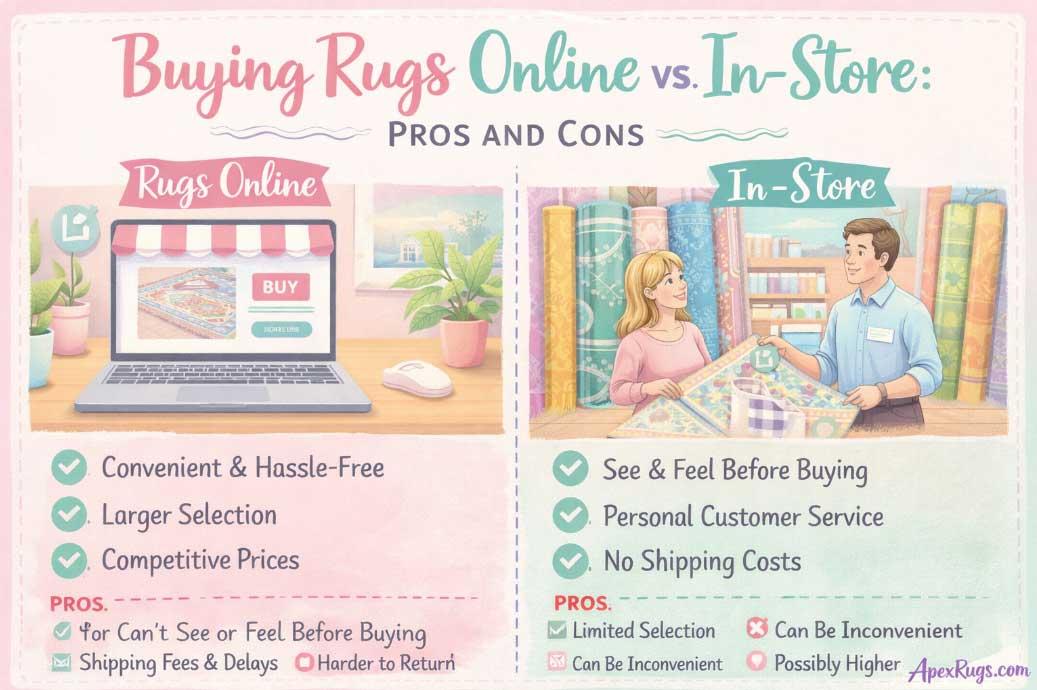
The most compelling argument for online rug shopping is the sheer breadth of inventory available. A single website can showcase thousands of rugs from dozens of manufacturers, representing styles from contemporary geometric patterns to antique Persian reproductions. This variety would require visiting perhaps twenty physical stores to match, consuming entire weekends in the process.
Online retailers operate without the spatial constraints that limit traditional showrooms. A physical store might display fifty rugs at most, carefully curated to represent their broader inventory. Meanwhile, an online platform can present its entire catalog, filterable by size, color, material, price, and style with just a few clicks. For someone seeking a very specific aesthetic or an unusual size, this difference becomes critical.
The global marketplace aspect of online shopping also opens doors to artisans and manufacturers that simply don't have distribution agreements with local retailers. A hand-knotted rug made in a small workshop in Turkey or a innovative design from a Scandinavian artist becomes as accessible as mass-produced options from major brands.
Price Advantages That Actually Matter
Online rug retailers consistently undercut physical stores on price, often by substantial margins. The reasons are straightforward: lower overhead costs, reduced staffing needs, and elimination of expensive retail real estate in prime locations. These savings get passed along to customers, sometimes resulting in price differences of 30 to 50 percent for comparable products.
The competitive transparency of online shopping amplifies these savings. Comparison shopping takes minutes rather than hours, and retailers know customers can easily check competitor pricing. This keeps margins tighter and motivates online sellers to offer frequent promotions, discount codes, and seasonal sales.
Many online retailers also operate on a direct-to-consumer model, cutting out the middlemen who traditionally add markup at each step of the distribution chain. A rug that passes from manufacturer to importer to wholesaler to retailer might double in price along the way. Online brands that handle this process themselves can offer significantly better value.

HUGEAR Outdoor Rug for Patios Clearance,Waterproof Mat
Product information
$39.99 $26.99
Product Review Score
4.47 out of 5 stars
36 reviewsProduct links
Shopping in Your Pajamas (and Other Conveniences)
The convenience factor of online rug shopping extends well beyond avoiding the need to put on real clothes. The ability to browse during lunch breaks, late at night, or during a lazy Sunday morning fits into modern lifestyles in ways that store hours simply cannot.
Virtual visualization tools have become surprisingly sophisticated. Many retailers now offer augmented reality features that let you see how a rug would look in your actual space using your smartphone camera. Upload a photo of your room, and algorithms will place the rug in proper scale and perspective. While not perfect, these tools provide a helpful preview that was impossible just a few years ago.
The entire transaction can happen without human interaction, which appeals to many shoppers. No sales pressure, no awkward negotiations, no feeling rushed to make a decision while a salesperson hovers nearby. You can spend as long as you need considering options, reading reviews, and comparing specifications.
The Case for Traditional Showrooms
The Irreplaceable Tactile Experience
Here's where online shopping hits its fundamental limitation: you cannot touch a photograph. Rugs are inherently tactile products. The softness underfoot, the texture against bare skin, the way pile catches light, the actual thickness and weight—these qualities define the rug ownership experience in ways that specifications and descriptions can only approximate.
A rug described as "plush" might feel divine to one person and uncomfortably squishy to another. "Medium pile" is a subjective term that varies between manufacturers. The difference between a hand-knotted and machine-made rug becomes obvious the moment you touch them, but photographs can't convey this distinction clearly.
Color accuracy represents another major challenge for online shopping. Rugs photographed under professional studio lighting will look different in your living room's natural light, different still under warm evening lamps, and completely transformed in a basement with fluorescent bulbs. Monitors vary in color calibration, and what looks like a soft cream on your phone might be closer to gray in reality. Physical showrooms let you see rugs under multiple lighting conditions and in actual room contexts.
The smell of a new rug—particularly wool or natural fiber options—can be strong initially. Some people find it pleasant and organic; others find it off-putting. You won't discover your reaction until the rug arrives at your door.
Expert Guidance When You Need It
Knowledgeable sales staff in specialty rug stores possess expertise that algorithms and product descriptions cannot replicate. They understand which rug constructions hold up best in high-traffic areas, which fibers resist staining, which backing materials work on different floor types, and which sizes will properly anchor furniture arrangements.
This guidance becomes invaluable for first-time rug buyers or those tackling challenging spaces. A consultant can warn you away from a jute rug for a kitchen (it stains easily), suggest alternative sizes when your first choice won't work with your furniture layout, or explain why spending more on a quality pad will extend your rug's life by years.
The relationship aspect matters too. A good rug specialist takes time to understand your lifestyle, aesthetic preferences, and budget constraints. They might steer you toward options you hadn't considered or talk you out of purchases you'd later regret. This personalized service creates value that extends beyond the transaction itself.
Immediate Gratification and Certainty
Walking out of a store with your rug in hand—or having it delivered within days—satisfies the human desire for instant gratification. No waiting anxiously for shipping, no worrying about porch pirates or damaged deliveries, no uncertainty about whether the rug will actually work in your space.
The certainty factor is equally important. When you've touched the rug, seen it in person, and made your selection with eyes and hands rather than faith in photography, buyer's remorse becomes far less likely. You know exactly what you're getting.
Returns are also simpler with local purchases. If something doesn't work, you load it in your car and handle the return face-to-face rather than dealing with shipping labels, repackaging, and waiting for refund processing. Many stores will exchange on the spot.
The Hidden Complications of Online Rug Buying
Return Logistics Can Be Nightmarish
Online rug retailers typically offer generous return policies because they have to—customers buying sight unseen need that safety net. However, the actual process of returning a large rug reveals complications that aren't immediately obvious.
Rugs are heavy and bulky. A 9x12 wool rug can weigh over sixty pounds. Repackaging it securely, arranging for shipping carrier pickup, and getting it to a drop-off location requires physical effort and often help from another person. Some retailers require return shipping at customer expense, which can easily exceed one hundred dollars for larger pieces.
The timing creates pressure too. Return windows typically run 30 days from delivery, but receiving the rug, living with it for a while to see how it truly works in your space, and making a final decision can consume most of that window. Rush the decision, and you might keep something that doesn't quite work. Wait too long, and you're stuck with it.
Multiple returns become financially punishing. If you order three rugs to compare in person—a common strategy—and return two, the shipping costs can eliminate any savings from online discount pricing.
Quality Control Gambles
Physical showrooms stock actual inventory that's been inspected. Online orders often ship directly from warehouses where individual pieces haven't been unrolled and examined since manufacturing. This means issues like color inconsistencies, slight pattern irregularities, or minor damage might not be caught before shipping.
Machine-made rugs generally maintain consistent quality, but hand-knotted or hand-tufted pieces vary by nature. The rug you receive might not precisely match the display photos, which typically show a perfect example. For expensive handmade rugs, these variations can be disappointing.
Photography can also mask construction quality. A rug that looks thick and luxurious in professional photos might reveal itself as thin and cheap-feeling in person. The density of pile, the quality of dyes, the craftsmanship of edges and backing—all these elements are difficult to judge from images and specifications alone.
The Underappreciated Challenges of In-Store Shopping
Limited Inventory Creates Compromise
The physical constraints of retail space mean you're shopping from a curated selection rather than a comprehensive catalog. That perfect rug might exist from the same manufacturer but not be displayed in the showroom. Sales staff can show you catalog books or websites, but you're back to buying sight unseen anyway.
Many stores stock primarily from vendors they have established relationships with, potentially missing out on emerging designers, niche manufacturers, or better values from brands outside their distribution network. Your options are limited by the buyer's selections, which may not align with your specific taste or needs.
Unusual sizes pose particular problems. If you need a runner that's exactly 2.5 feet by 10 feet, or a square rug for a specific space, the store might not have anything that fits. Custom orders are possible but expensive and time-consuming, eliminating the instant gratification benefit of in-store shopping.
The Psychological Pressure of In-Person Sales
However friendly and helpful, salespeople are ultimately working to close sales. This creates subtle pressure that affects decision-making. The question "What do you think?" expects an answer now, not after three days of consideration. The social awkwardness of saying "I need to think about it" after someone has spent thirty minutes helping you can push people toward premature decisions.
Sales tactics vary by store, but commission-based compensation naturally motivates staff to emphasize higher-margin products or push add-ons like rug pads, cleaning services, or protection plans. Distinguishing genuinely helpful advice from revenue-motivated suggestions requires savvy that many shoppers lack.
The physical effort of visiting multiple stores to comparison shop is also draining. After the third showroom in an afternoon, decision fatigue sets in. The rug that seemed mediocre at the first store starts looking acceptable by the fourth, not because it's better but because you're exhausted and want to be done.
Finding the Smart Middle Ground
The most sophisticated rug shoppers often combine both approaches strategically. Visit showrooms to touch different materials, understand construction quality, and see various styles in person. Use this hands-on research to educate yourself about what you actually want. Then leverage that knowledge for online shopping, where you can find the best price on exactly what you're looking for.
Many online retailers have launched showroom partnerships or pop-up locations specifically to address the touch-and-feel problem. These hybrid models let customers experience products physically while maintaining the inventory breadth and pricing advantages of online operations.
Some traditional retailers have responded by enhancing their online presence with detailed videos, close-up photography showing texture, and improved specifications. The gap between online and in-store shopping continues to narrow as both sides adopt each other's best features.
Making the Right Choice for Your Situation
The optimal shopping method depends heavily on individual circumstances. For budget-conscious shoppers willing to accept some risk in exchange for savings, online buying makes tremendous sense, especially for lower-priced rugs where the stakes are relatively low.
Those purchasing high-end rugs as long-term investments might find the in-store experience worth the premium pricing. When spending several thousand dollars on a piece you intend to own for decades, seeing it in person before committing provides valuable peace of mind.
The urgency of your timeline matters too. Need a rug for a room you're using daily? In-store shopping delivers immediate solutions. Furnishing a space slowly and thoughtfully? Online shopping allows for patient searching and careful consideration.
Your confidence in your own judgment is also a factor. Experienced rug owners who understand quality markers, know their preferences well, and can accurately judge from photographs might thrive shopping online. First-time buyers or those uncertain about style and quality benefit more from hands-on guidance.
The physical logistics of your situation play a role as well. Living in a major city with numerous rug showrooms creates different options than residing in a rural area hours from the nearest specialty store. Your vehicle size, ability to transport large items, and access to help with heavy lifting all influence which method works better.
The Future of Rug Shopping
Technology continues to erode the traditional advantages of physical retail. Virtual reality showrooms, improved augmented reality visualization, fabric sample programs, and better photography all chip away at the tactile gap. Meanwhile, online retailers open physical locations to capture customers who still want that hands-on experience.
The trend points toward continued convergence rather than dominance of either model. The most successful retailers—online and traditional—will likely be those that offer flexibility, meeting customers wherever they are in their shopping journey and combining the strengths of both approaches.
For consumers, this competition drives better service, better pricing, and better tools across the board. Whether you ultimately purchase online or in-store, the quality of your options and the information available to guide your decision continues to improve.
The choice between buying rugs online versus in-store isn't about finding the objectively superior method—it's about understanding which approach aligns better with your priorities, constraints, and shopping style. Both have legitimate strengths and real weaknesses. The smart shopper recognizes this and chooses strategically based on their specific situation rather than dogmatically committing to one approach for all purchases.