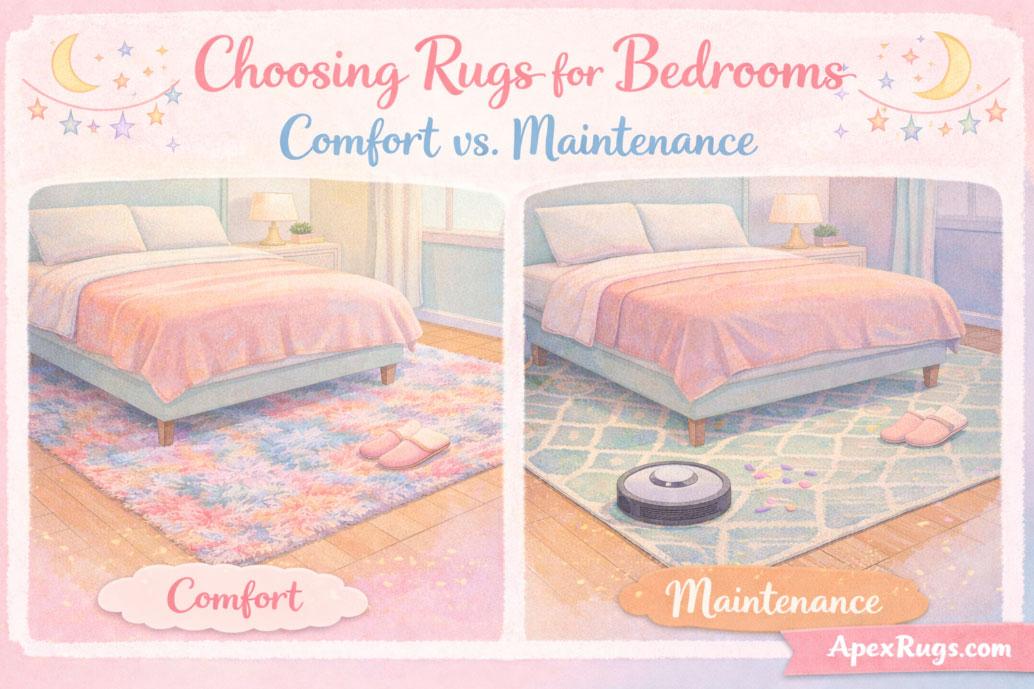
The morning ritual starts the same way for millions of people: the alarm sounds, eyes open reluctantly, and then comes that crucial moment—the first step out of bed. What your feet meet in that vulnerable, half-awake state sets the tone for the entire day. A plush, cloud-like rug transforms the experience into something genuinely pleasant. Cold hardwood or tile, on the other hand, jolts you into consciousness with all the gentleness of a bucket of ice water.
This daily interaction makes the bedroom rug one of the most intimate pieces of furnishing in your home. Yet choosing the right one involves navigating a minefield of competing priorities. The rug that feels like walking on air might become a maintenance nightmare. The practical, easy-clean option could leave your feet longing for something softer. The truth is, there's no perfect rug—only the perfect rug for your specific circumstances, habits, and willingness to commit to upkeep.
The Comfort Spectrum: What Your Feet Actually Want
Comfort in rugs isn't a single characteristic but a constellation of qualities that work together. The most obvious factor is pile height—the length of the fibers rising from the rug's backing. Deep, luxurious shag rugs with pile heights of two inches or more offer an almost narcotic level of foot comfort. Your toes sink into them, enveloped in softness that makes every step feel indulgent.
But pile height tells only part of the story. Pile density matters enormously. A rug with short, densely packed fibers can feel more supportive and comfortable than a taller but sparse pile. The best comparison is mattress shopping: a thick but cheap mattress won't beat a thinner, high-quality one. The fiber content plays an equally crucial role. Wool, for instance, has natural crimp and elasticity that creates a springy, resilient feel underfoot. Silk adds a cool smoothness that some people love and others find less cozy.
The bedroom's specific microclimate influences comfort in ways many people overlook. If you live somewhere with cold winters, nothing beats the insulating properties of a thick wool rug. The natural fibers trap air, creating a barrier between your feet and the cold floor below. In hot, humid climates, a heavy wool rug might feel oppressive. A flatweave cotton or linen rug provides enough cushioning without the thermal blanket effect.
Synthetic fibers like polyester and polypropylene have evolved dramatically from their scratchy ancestors. Modern microfiber technology can produce surprisingly soft surfaces at accessible price points. They won't match the absolute luxury of top-tier natural fibers, but they've closed the gap considerably. For many people, the 80% solution at 40% of the cost represents the sweet spot.
The Maintenance Reality Check
Every rug accumulates dirt, dust, and debris. The question isn't whether your bedroom rug will get dirty but how quickly, how visibly, and how difficult cleaning becomes. These factors don't always align predictably. Some of the most comfortable rugs turn into high-maintenance burdens, while certain practical options prove more troublesome than expected.
Shag rugs exemplify this paradox. Their deep pile feels phenomenal but becomes a particle trap. Dust, hair, dead skin cells, and any small objects that fall burrow down into the fibers where vacuum cleaners struggle to reach. A standard upright vacuum often glides across the surface, missing the debris lurking in the depths. Some shag rugs require specialized care: hand-shaking outdoors, professional cleaning, or using vacuum attachments designed specifically for high-pile surfaces. For someone with pets, allergies, or simply limited time, this reality can transform a comfort investment into a source of stress.
Natural fibers present their own maintenance paradoxes. Wool is remarkably resilient and naturally stain-resistant thanks to its lanolin content. Spills often bead on the surface initially, giving you time to blot them away. However, wool also absorbs odors more readily than synthetics and requires careful cleaning with pH-neutral products. Hot water, harsh chemicals, or aggressive scrubbing can damage the fibers or cause shrinkage. Cotton rugs, while washable, can be heavy and cumbersome when wet, making home laundering of larger pieces impractical.
Synthetic rugs often win on pure ease of maintenance. Polypropylene resists stains admirably, doesn't absorb moisture, and can handle more aggressive cleaning methods. You can use commercial carpet cleaners without worrying about fiber damage. The trade-off comes in longevity and how the fibers respond to wear. Synthetics can mat down more quickly than wool, developing traffic patterns that become permanent. What starts as a plush surface can turn flat and lifeless within a few years of daily use.
Color and pattern choices dramatically affect perceived maintenance. Light-colored rugs show every speck of dirt, every footprint, and every stain. They create a pristine, airy feeling when clean but require near-constant vigilance to maintain that appearance. Dark rugs hide daily debris well but show dust, lint, and pet hair with frustrating clarity. The real winners in the maintenance game are medium-toned rugs with subtle patterns. They camouflage the inevitable while still looking intentional rather than dingy.
The Size and Placement Equation
The dimensions and positioning of your bedroom rug affect both comfort and maintenance in ways that aren't immediately obvious. The classic placement puts a large rug under the bed with substantial extensions on three sides—the foot and both sides. This creates the luxury morning experience: when you swing your legs out of bed, your feet land on softness. The rug's size ensures you're stepping onto fabric whether you exit from either side or walk around to make the bed.
This generous sizing maximizes comfort but also maximizes the surface area requiring cleaning. A king-sized bed might sit on a 9x12-foot rug, putting considerable square footage under the bed frame where it's protected from daily wear but also difficult to vacuum. Dust bunnies colonize these hidden areas, and moving the bed for proper cleaning becomes a two-person operation scheduled quarterly at best.
The runner approach—placing long, narrow rugs along each side of the bed—reduces maintenance burden while still providing that crucial foot-landing comfort. You're cleaning less total area, and accessing the rugs for thorough vacuuming or spot-cleaning is straightforward. The aesthetic differs, though, creating a more tailored, intentional look rather than the enveloping luxury of a room-size rug.
Some people opt for a small accent rug at the bedside only, particularly if budget or space is limited. This delivers the comfort where it matters most while minimizing maintenance. The downside is a less cohesive look and the reality that you're still stepping onto hard floors for most of your bedroom navigation.
Layering rugs—placing a smaller, higher-maintenance, ultra-comfortable rug atop a larger, practical base—splits the difference creatively. You get the visual impact and broad coverage of a large rug with the tactile luxury of something special where it counts. The top rug, being smaller, is easier to take up for cleaning or to rotate to distribute wear.
Material Deep Dive: The Contenders
Wool deserves its reputation as the gold standard for bedroom rugs. The crimp in wool fibers creates natural resilience that synthetic alternatives struggle to match. Even after years of use, quality wool rugs maintain their structure and bounce-back. Wool is naturally flame-resistant, an underappreciated safety feature. It regulates temperature well, feeling cool in summer and warm in winter—a remarkable trick of physics and biology.
The maintenance picture for wool is nuanced. It's naturally soil-resistant, and regular vacuuming handles routine care. But wool's protein-based fibers can attract moths, requiring vigilance and potentially mothproofing treatments. It also reacts poorly to alkaline cleaners and excessive moisture. Professional cleaning every 12-18 months is recommended, adding to the long-term cost of ownership. For people with lanolin sensitivities, wool can trigger allergic reactions, though this is relatively uncommon.
Cotton represents accessibility and versatility. Cotton rugs are generally washable, at least in smaller sizes, and tolerate aggressive cleaning better than wool. They're hypoallergenic, breathable, and available in endless styles from casual flatweaves to plush chenille. The comfort level varies enormously depending on construction. A densely woven cotton rug can feel quite soft, while a looser weave provides less cushioning.
The downsides center on durability and maintenance frequency. Cotton shows wear more quickly than wool, particularly in high-traffic areas. It absorbs spills readily, so stains can set faster if not addressed immediately. Cotton rugs wrinkle and bunch more than heavier materials, requiring frequent repositioning. In humid environments, cotton can develop mildew if it doesn't dry completely after cleaning.
Silk occupies a rarified space in the rug world. Silk rugs offer incomparable luster and a uniquely smooth, cool feel underfoot. They're usually flat-woven or have very low pile, so they don't provide the plush comfort of shag or high-pile wool. Silk's appeal is tactile refinement rather than cloud-like softness.
Maintenance for silk rugs borders on obsessive. They stain easily, and many cleaning methods can damage the delicate fibers. Water can leave permanent marks. Silk rugs really belong in low-traffic areas or under furniture where they're protected. In a bedroom, a silk rug makes sense only if placed primarily under the bed as a decorative element rather than a functional surface you'll walk on daily.
Jute, sisal, and other plant-based fibers offer textural interest and eco-friendly credentials. They're durable and handle wear well in their natural state. However, comfort is not their strong suit. These rugs feel coarse and scratchy underfoot—fine for creating visual warmth but not for that first morning step out of bed. They're better suited as layering bases under softer rugs or in bedrooms where you primarily wear slippers.
Synthetic options have proliferated with varying quality levels. Polypropylene rugs resist moisture, stains, and fading better than most natural fibers. They're budget-friendly and easy to clean, sometimes even suitable for outdoor or high-moisture environments. The comfort can be surprisingly good in well-made versions, though they generally lack the temperature-regulating properties of natural fibers. Cheaper synthetics develop static, attract lint, and can emit chemical odors when new.
Viscose and rayon occupy a middle ground—semi-synthetic fibers derived from plant cellulose. They can mimic silk's sheen at a fraction of the cost and feel quite soft. However, they're vulnerable to moisture damage and wear, sometimes performing worse than either pure natural or pure synthetic alternatives. A viscose rug in a bedroom requires keeping drinks off the floor and immediate attention to any spills.
Real-World Scenarios: Matching Rugs to Lives
A young professional living alone in a small apartment has different rug needs than a family with three kids and a dog. Your actual lifestyle should dictate your comfort-versus-maintenance balance more than abstract preferences.
For the minimalist or busy professional, a good-quality synthetic or wool-blend rug in a medium tone with subtle patterning makes sense. It should be large enough to define the space but not so oversized that moving it for cleaning becomes a production. Monthly vacuuming and annual professional cleaning keep it looking good without consuming precious time. The comfort level will be good without being transcendent, and that's fine—you're prioritizing a functional, attractive space that doesn't demand constant attention.
Parents of young children face different calculations. Kids spill things, track in dirt, and occasionally use rugs as art canvases. A machine-washable cotton rug or an easily cleaned polypropylene option makes more sense than an expensive wool investment. The comfort matters—you want something nice for bedtime stories and playing on the floor—but repairability and replaceability factor heavily into the equation. Buying a mid-range rug every few years as kids age out of messy phases often works better than trying to preserve something precious.
Pet owners need rugs that handle shedding, occasional accidents, and the wear patterns from clawed feet. Tight, low-pile constructions trap less pet hair than shag. Darker patterns in multi-tonal colors camouflage fur. Stain resistance becomes paramount. Many pet owners keep inexpensive washable rugs in bedrooms, accepting that these pieces have a limited lifespan and planning for periodic replacement.
For someone dealing with allergies or asthma, the rug choice significantly impacts air quality. Low-pile or flatweave rugs accumulate fewer allergens than high-pile options. Synthetics that don't harbor dust mites offer advantages over natural fibers. The trade-off is that synthetic rugs can off-gas VOCs when new, so airing them out thoroughly before use becomes important. Some people with severe sensitivities do better with no bedroom rug at all, relying on slippers for foot comfort.
Renters face constraints that homeowners don't. You probably won't invest in a $2,000 custom-sized rug for a space you'll leave in a year or two. But that temporary feeling doesn't mean accepting uncomfortable floors. Mid-priced rugs in standard sizes offer good comfort and style without requiring a long-term commitment. Choosing versatile patterns and colors that work in different spaces makes the rug portable to your next home.
The Financial Calculus
Rug pricing spans from under $50 for a small synthetic piece to tens of thousands for handmade wool or silk masterworks. Understanding what drives these price differences helps in making informed comfort-versus-maintenance decisions.
Hand-knotted rugs command premium prices because they represent hundreds of hours of skilled labor. Each knot is tied individually, creating exceptional density and durability. These rugs can last generations with proper care. The maintenance requirements are significant—professional cleaning, careful spot treatment, protection from sunlight—but the per-year cost can actually be quite reasonable if you keep the rug for decades.
Machine-made rugs offer much more accessible pricing and have improved dramatically in quality. Modern manufacturing can create quite attractive pieces with reasonable comfort levels. They won't have the character and longevity of hand-knotted work, but for many bedrooms, that doesn't matter. A machine-made rug lasting 5-10 years at a fraction of the cost can be the smarter choice, especially if your style preferences might evolve or you expect life changes.
The temptation with rugs is always to stretch for more comfort or beauty than your maintenance capacity supports. A luxurious wool shag rug is a bad investment if you won't commit to its care routine. It'll deteriorate faster than a simpler, more practical option you actually maintain properly. Honest self-assessment about your cleaning habits should inform your budget allocation.
Sales and discount retailers have made quality rugs more accessible, but not all deals are equal. An inexpensive rug made from decent materials represents value; an inexpensive rug made from poor materials is just cheap. Feeling the rug in person helps identify the difference. Check the backing for stability, tug gently on fibers to ensure they're well-anchored, and examine the density. A sparse pile is a sparse pile regardless of price.
The Seasonal Consideration
Some dedicated homemakers swap bedroom rugs seasonally—lighter cotton or flatweave pieces for summer, heavier wool for winter. This approach maximizes year-round comfort while allowing for thorough cleaning and storage during off-seasons. It's also more work and requires storage space.
A more practical version involves adding a smaller, warmer rug for winter months, perhaps just at the bedside where your feet land first thing in the morning. This gives you seasonal comfort variation without completely redecorating or storing large pieces. Come spring, roll up the winter rug, give it a good cleaning, and enjoy the cooler feel of your primary rug without the extra layer.
Climate plays a significant role in how much seasonal variation matters. In truly cold climates, you'll probably want substantial rug coverage year-round for insulation. In moderate climates, seasonal variation can meaningfully improve comfort. In hot climates, you might prefer minimal rugs in summer or rely on materials like cotton and linen that don't add warmth.
Making the Decision
The perfect bedroom rug balances your personal comfort needs against your realistic maintenance capacity while fitting your budget and aesthetic vision. That's a lot of variables, which explains why people agonize over these decisions or end up with buyer's remorse.
Starting with honest self-assessment helps. How much do you value that luxurious underfoot feeling? Are you willing to vacuum twice weekly and arrange annual professional cleaning? Do you have pets or children that complicate maintenance? What's your actual budget, including long-term care costs? Do you plan to stay in this home for years, or might you move soon?
Testing rugs in person provides information that online shopping can't. Stand on the rug barefoot. Walk across it. Crouch down and run your hands through the pile. Ask about care requirements and get specific: what cleaning products work, how often is professional service recommended, how does it handle spills?
Reading reviews helps, particularly for online purchases, but filter them intelligfully. Someone complaining that a rug sheds is providing useful information. Someone complaining that a jute rug feels scratchy didn't do their research—that's inherent to the material. Look for patterns in feedback about durability, how the rug holds up to cleaning, and whether comfort levels match the marketing promises.
Consider starting with something mid-range rather than making a huge investment in an untested material or style. You'll learn what you actually value in a bedroom rug through living with it. That $300 wool blend might teach you that you really do want to upgrade to premium wool, or it might prove perfectly sufficient for your needs.
The Verdict: No Universal Answer
The bedroom rug question has no single right answer because bedrooms and the people who sleep in them vary tremendously. A shift worker who's in and out of bed at odd hours has different priorities than someone who follows a standard schedule. Someone who does yoga or exercises in their bedroom needs more square footage and different cushioning than someone who uses the space only for sleep.
The comfort-versus-maintenance balance ultimately comes down to which discomfort you'd rather live with: slightly less luxurious feet or slightly more demanding upkeep. Neither option is wrong, and neither is objectively better. The rug that makes you happy stepping onto it each morning while not making you resentful about its care requirements—that's the right rug.
For many people, the sweet spot lands somewhere in the middle: a good-quality wool or wool-blend rug with medium pile height, sized appropriately for the space, in a color that shows neither every speck of dust nor every piece of lint. It feels noticeably better than bare floors without crossing into the realm of maintenance burden. It's an investment but not an irresponsible one. It improves daily life measurably without dominating your thoughts or schedule.
Others will happily trade maintenance effort for maximum comfort, finding joy in the ritual of rug care and viewing it as part of taking care of their home. Still others will prioritize minimal upkeep above all else, satisfied with sufficient rather than optimal comfort.
The key is making an active, informed choice rather than defaulting to whatever seems prettiest in the store or getting swayed by a sale on something that doesn't actually fit your life. Your bedroom rug will be with you for thousands of mornings. It deserves the thought required to get it right, or at least right enough.
That first step out of bed sets your daily tone. Make it a good one—whatever that means for you.